antarcita culture
Antarctica. The 7th continent and part of almost everyone’s bucketlist. Here are fifty of our favourite facts about this enormous frozen land to help entice you into visiting.
1. Antarctica is its own continent
Antarctica is one of the world’s seven continents. It is the fifth-largest, being bigger than the whole of Europe and nearly twice the size of Australia.
2. It is very windy
On average, Antarctica is the windiest of all the continents. Because its landscape is flat over very large distances, winds can reach speeds of up to 320 km/h. On other continents, winds only reach these speeds during storms, cyclones, hurricanes, tornados, etc.
3. It is officially a desert
Antarctica is the driest continent on the planet and is officially classified as a desert. The cold temperatures and strong winds result in very low humidity, which makes it difficult for clouds to form. Along the coastline (especially on the Antarctic Peninsula) rain is possible, but it is still rare.
4. Antarctica holds most of the Earth´s fresh water
Although it is a desert, Antarctica contains 70% of the Earth’s fresh water. However, it is mostly bound up in the enormous ice sheet so you won’t be drinking out of too many running streams there.
Geographical Features
5. Home of the South Poles
The current locations of both the Geographic South Pole (where the Earth’s surface intersects the Earth’s axis of rotation) and the Magnetic South Pole (where the direction of the Earth’s magnetic field is vertically upwards) lie within Antarctica. However, this has not always been the case. Millions of years ago, Antarctica used to be closer to the Equator but has now moved to its position at the bottom of the planet due to tectonic motion.
6. (Almost) everywhere is North
If you are standing at the Magnetic South Pole, then everywhere is North of you. The Magnetic South Magnetic Pole currently lies almost 3,000km from the Geographic South Pole and moves at the rate of about 5km/year.
7. The most remote location in Antarctica is not the South Pole
Antarctica is positioned asymmetrically around the South Pole. This means that the South Pole is not always located the same distance from the coastline. The most remote place in Antarctica (the one furthest from all coastlines) is called the South Pole of Inaccessibility and lies about 900km from the Geographic South Pole.
8. Antarctica is the largest ice sheet in the world
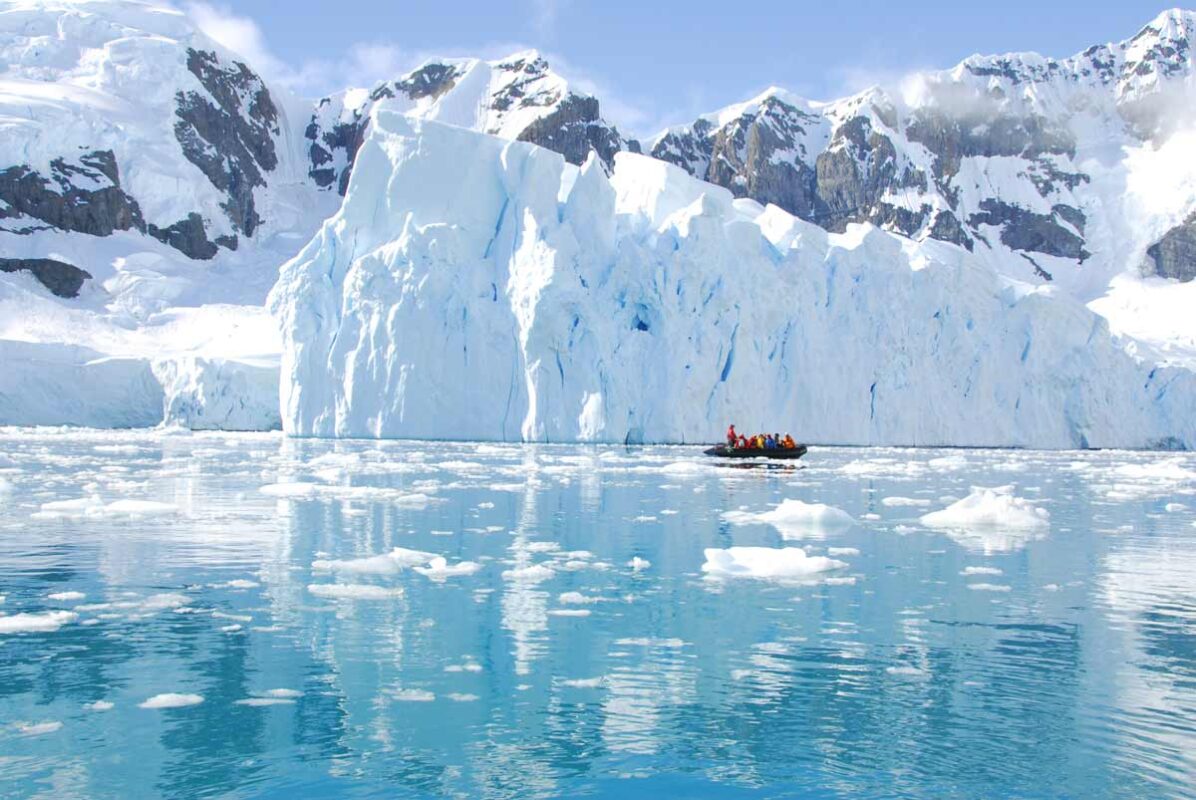
More than 98% of Antarctica is covered with ice. This makes it the largest ice sheet in the world, with Greenland coming in second. It is estimated that Antarctica contains around 90% of the world’s ice, and if it all melted, sea levels would rise by around 60 metres.

9. Around 1-2% of Antarctica is permanently ice-free
The driest places on Earth are Antarctica’s Dry Valleys. The air is so dry and the temperatures so cold in these barren and dusty areas, that even snow does not fall.
10. Home of the world´s largest icebergs
In March 2000, the largest iceberg ever measured broke away from Antarctica’s Ross Ice Shelf. Named B-15, it was about 270 km long and 37 km wide – larger than several of the world’s island states. 18 years after it started drifting north into the Atlantic Ocean and breaking apart, four small icebergs out of the original behemoth remained.
11. Home to the southernmost active volcano
Mount Erebus is one of the Earth’s few constantly active volcanoes. It continuously releases gas and has had several eruption episodes over the years resulting in lava flowing down its slopes and ejected molten rock. It is the site of the Earth’s only long-lived lava lakes and is Antarctica’s second-highest mountain.
12. Antarctica has high mountains
Antarctica’s highest mountain, Mount Vinson, stands 4,987 metres tall. This is just over half the height of Mount Everest. It is named for Carl Vinson, a US Congressman who keenly supported Antarctic expeditions, and was summited for the first time in 1966 by a team led by American, Nicholas Clinch.
13. Antarctica has a buried mountain range
The Gamburtsev mountains (also referred to as the Ghost Mountains) stretch for 1,200 km across Antarctica and reach heights of more than 3,000 metres. However, you can’t see them because the thickness of the ice in those regions is more than 4,000m. They are completely buried by snow and ice.
14. Home to one of the longest mountain ranges on Earth
The Transantarctic Mountains run for more than 3,500km, making them one of the longest mountain ranges on the planet. They essentially run from the Weddell Sea to the Ross Sea and divide Antarctica into East and West, with East Antarctica making up 2/3 of the continent. Their summits are generally ice-free and they are the location of most of Antarctica’s Dry Valleys.

15. Home to some of the world´s biggest canyons
There are several rift systems in Antarctica – both in the east and the west. The West Antarctic Rift System spans an enormous area (it is ~3,000km long and ~700km wide) and contains the Ferrigno Rift, a 1.6km deep canyon that is almost as deep as the Grand Canyon. Scientists think that this canyon is causing this part of Antarctica to lose ice more rapidly than expected.
16. Home to many underground lakes
More than 200 lakes have been discovered under the Antarctic ice sheet. Geothermal heat from the Earth’s interior and insulation from above by the thick layers of ice ensures that they remain liquid. The freshwater Lake Vostok is the largest of these. Buried under about 4km of ice, it is a subglacial lake, meaning it is encased by the ice of a glacier, not rock or earth.
17. It has a blood-red waterfall
Part of the remote Taylor Glacier in East Antarctica, the disturbing red colour of “Blood Falls” was a mystery for more than 100 years. Then, in 2017, scientists discovered that the water (which originates from a subglacial lake) is high in salt and oxidised iron. When the water comes into contact with air, the iron rusts giving it its amazing red colour.
18. It has the saltiest lake on Earth
At the base of the Transantarctic mountains, the Don Juan Pond is the saltiest body of water on Earth. Its salt concentration is 40% compared with ~30% for the Dead Sea and 3.5% for normal seawater. The salt is actually calcium chloride which lowers the freezing point of water even more than sodium chloride (which is what you use for table salt). This, and the high salinity of the lake means it stays liquid even in the frigid temperatures of Antarctica.
19. It is surrounded by a permanent current
The Circumpolar Current is the world’s largest wind-driven current. It circles clockwise around Antarctica (from west to east) and helps to keep the continent cold by blocking the warmer water from more temperate oceans. It is very rich in nutrients which is why there is a lot of marine life near Antarctica.
20. It is one of the best places on Earth to find meteorites
Certainly, it helps that the dark meteorites stand out against the pristine white snow and ice of Antarctica. But the cold, dry atmosphere also helps to preserve them against the usual weathering processes.
Wildlife
21. There are no polar bears in Antarctica
Polar bears are only found in the Arctic, not the Antarctic.
22. There are no sled dogs in Antarctica
Many of the successful early explorers of Antarctica used sled dogs from the Arctic to help on their expeditions. However, in 1994 all dogs were banned from the continent. This was due to the worry that they may spread diseases to the seal population and that they may also disturb the wildlife if they broke free of their restraints.
23. Antarctica has a lot of penguins
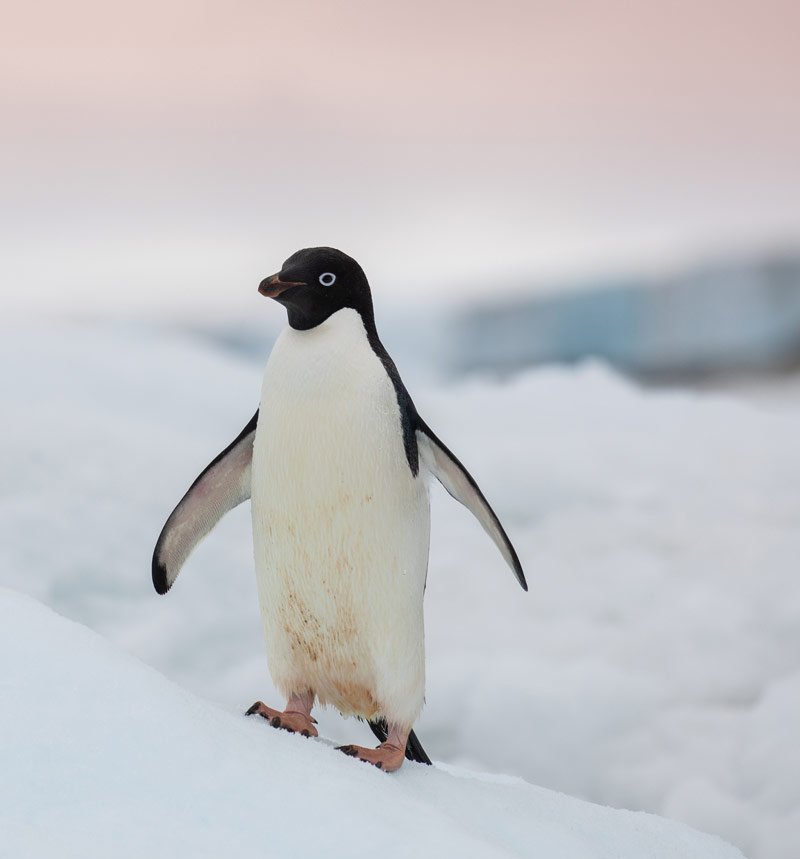
While there may not be any polar bears or sled dogs, Antarctica is one of the best places in the world to see penguins. In fact, the penguin is Antarctica’s “national” animal. Of the 17 different species of penguins on the planet, 8 of them inhabit Antarctica. Emperor penguins and Adélie penguins can only be found on the Antarctic continent, while Chinstraps, Macaronis, Gentoos, Rockhoppers, Magallanics, and Kings can also be found in sub-Antarctic locations.
24. Antarctica is a heaven for whales
There are also 8 species of whale that are commonly seen in Antarctic waters. Southern Right, Sei, Humpback, Fin, Antarctic Minke, Sperm, and the enormous Blue whale spend part of every year near Antarctica, as do Orcas (Killer whales).